
Finding something useful to post every week can become a job of its own. You sit down to write a social caption, get distracted by everything else happening in the business and suddenly another week has disappeared.
A good interview can give you a practical starting point. Spend some time talking to someone who knows their subject and you may come away with material for a longer video, an article, a few short clips and answers to questions customers regularly ask.
The trick is to plan for those uses before the conversation happens. Simply chopping a recording into smaller pieces doesn’t guarantee that any of them will be worth watching.
Pick a subject with a clear audience
Start with a question your customers actually ask. What do people struggle to understand? What do they need to know before they book? Which part of your work would make more sense if someone explained it properly?
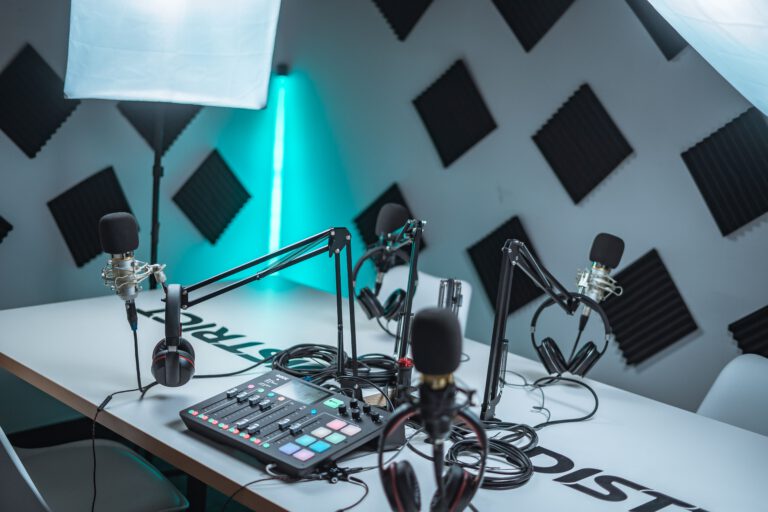
For example, a business offering podcast production could interview its producer about preparing a first episode. That conversation could cover choosing a format, briefing guests, recording remotely and deciding what to remove in the edit.
Each topic has a clear purpose. That makes it easier to turn the answers into useful standalone pieces later.
Ask questions that produce usable answers
You don’t need to make the interview sound rehearsed. You do need to think about whether someone watching a short extract will understand what’s being discussed.
If the answer begins with “yes, definitely”, ask a follow-up that brings the subject back into the conversation. Encourage examples. “What would that look like for a small business?” will often give you more usable material than another broad question about the industry.
Leave a short pause between questions and answers. If the interviewer talks over every response, the edit becomes more difficult and a potentially useful clip may need extra explanation.
Choose the strongest pieces
After the recording, review the conversation before deciding how many posts to make. Mark the answers that explain something clearly, offer a practical suggestion or tell a relevant story.
One interview might produce four strong clips. Another might give you one excellent article and very little suitable video. Let the material guide the output. Stretching a short answer across multiple posts can make the content feel repetitive very quickly.
Keep the speaker’s meaning intact when editing. Removing the question, a qualification or the sentence immediately before a quote can change what an answer appears to say. A punchier clip isn’t much use if the person featured no longer agrees with it.
Give each format its own edit
A website article needs structure and enough explanation to stand on its own. A short video needs to establish its subject quickly. An email might work best with a brief introduction and a link to the full conversation.
Write for each setting. Don’t assume a transcript is ready to publish as an article, or that the same caption will make sense everywhere. Check video captions for names, technical terms and punctuation before publishing. Automatic captions can be a helpful starting point, but they still need a human read.
You can also spread the material out. Publish the main piece first, then use related extracts over the following weeks. Keep a simple record of what has been used so you don’t accidentally repeat the same point with a different thumbnail.
At Audex Media, we can help plan, record and edit content with those different uses in mind. If you’ve already got an interview sitting on a hard drive, it’s worth looking at what could still be made from it.