
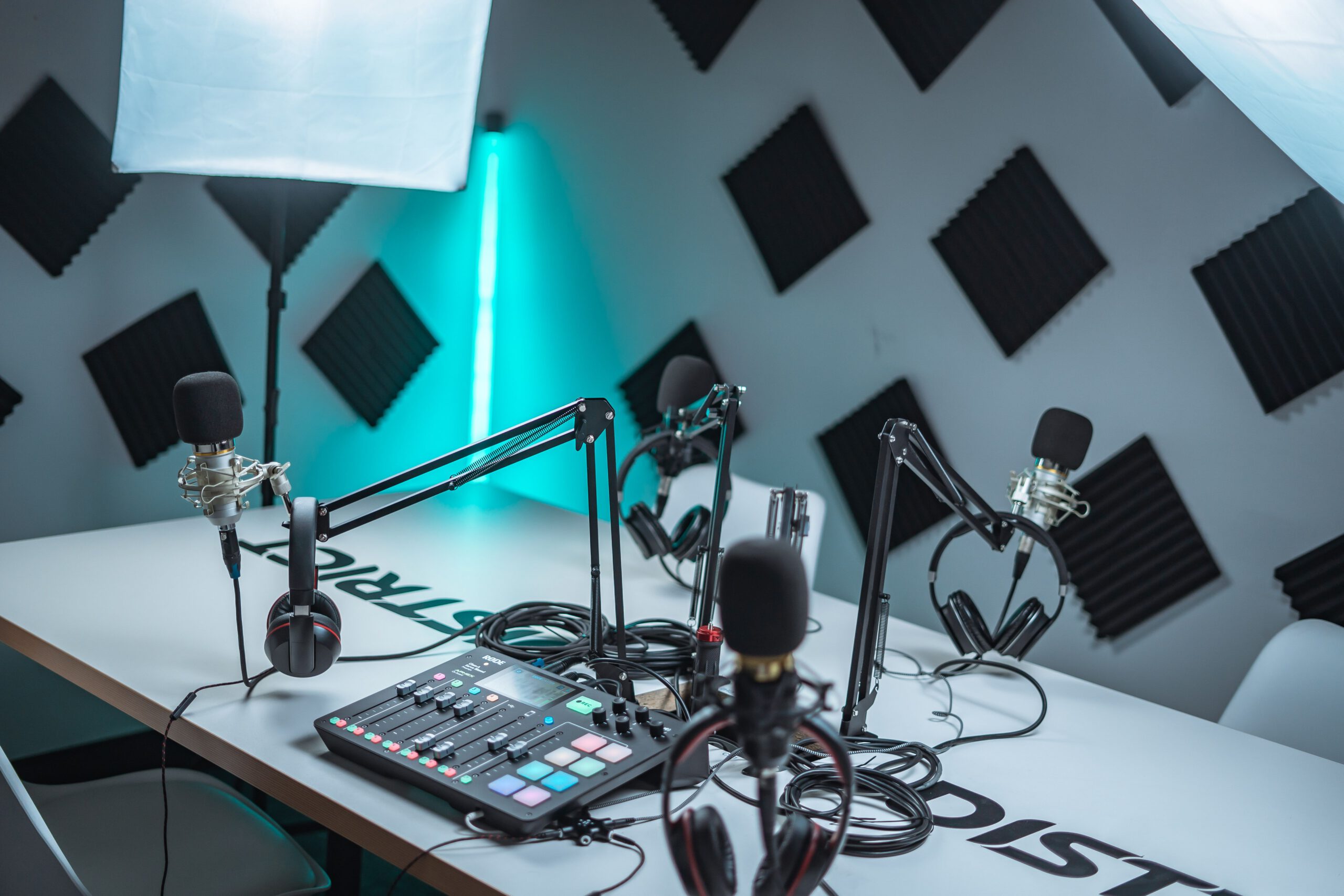

You’ve booked the guest, worked out the questions and finally found a time when everyone is available. Then you listen back to the recording and realise the air conditioning has been competing with the conversation for the entire interview.
That’s a frustrating way to finish a session, especially when the content itself is good.
For businesses recording podcasts, interviews, training material or social videos, the quality of the recording deserves some attention before anyone presses the red button. There is plenty that can be improved during editing, but a cleaner recording gives you more options and fewer compromises.
Listen to the room first
A room can look great on camera and still be a difficult place to record. Glass walls, bare floors and large empty spaces can make speech sound distant and echoey. A smaller room with curtains, carpet and soft furniture may give you a more useful starting point.
Before setting anything up, stand in the room and listen. Is there a fridge humming nearby? Can you hear traffic, the lift or conversations outside the door? These sounds are easy to tune out when you’re there in person. They become much harder to ignore when they’re sitting underneath someone’s voice.
You don’t necessarily need to build a studio. Sometimes moving to another room and choosing a quieter time of day will make a worthwhile difference.
Get comfortable with the microphone
Microphone placement matters. If someone starts close to the microphone and gradually leans back in their chair, the sound can change throughout the recording. Turning their level up later also brings up whatever else the microphone captured.
Set up the chair, microphone and notes so the speaker can stay comfortable and reasonably consistent. The right distance depends on the microphone, so record a short test and listen through headphones. Check for breath noise, harsh sounds and whether the voice is clear without being overloaded.
Give guests a quick explanation of the setup. They shouldn’t have to spend the whole interview wondering whether they’re using the microphone correctly.
Prepare a conversation people can follow
Good sound also needs something worth listening to. Before recording, decide who the piece is for and what you want them to take away from it.
For an interview, a short outline can be more useful than a tightly written script. Prepare the topics and a few questions, then leave room to follow an interesting answer. If a guest uses an industry term, ask them to explain it. Your listener may have exactly the same question.
For a business voiceover or training video, read the script aloud before the session. A sentence that looks fine in a document can be surprisingly awkward to say. Shorten it, give the speaker room to breathe and write the way someone would naturally explain the idea.
Run the boring checks
Record thirty seconds and play it back. Confirm that every microphone is being recorded, the correct input is selected and there is enough storage available. Listen for distortion and unexpected noise. Check the actual recorded file rather than relying entirely on what the software appears to be doing.
If it’s an important session, plan a backup recording where practical and appropriate. Make sure everyone understands that the session is being recorded and how the material will be used.
Those few minutes can feel unnecessary when everyone is ready to get started. They’re much easier to find than another hour in your guest’s diary.
At Audex Media, we help with audio production, podcast editing and the technical side of recording. If you’re planning a session, we can help you work through the setup before the first take.